why The film.
The film follows three Filipina American immigrant sisters with PhDs, all professors. I am a dean and distinguished professor at UCLA. Rhacel holds an endowed chair at Princeton. Juno is a professor at Cornell. You see those positions in how we walk, speak, and dress. You see them in our authorship, our authority, our agency.
All three of us were told, in different ways, that our work sat outside the discipline. Rhacel is now the leading sociologist of Filipina labor and migration. Juno's work on human-animal relations changed how science and technology studies account for violence and recognition. Mine analyzes power at the site of intimacy in the moving image. The specificity was never the limit.
AAPI women are among the least represented groups in higher education leadership, measured against how many of us hold the degrees. Bias, absent mentorship, and stereotype do that work.
What we learned in school is what we used to survive. Method as a way to make ourselves legible, recognizable. Speaking truth to power in a church, a university, or a family takes courage, and it changes the institution along with the woman who speaks. Others may call that demand immodest and ask us to shrink. The film is Filipina American feminism incarnate, and the case for why the professoriate and the deanships and the presidencies need us in them. Owning our hard-earned success.
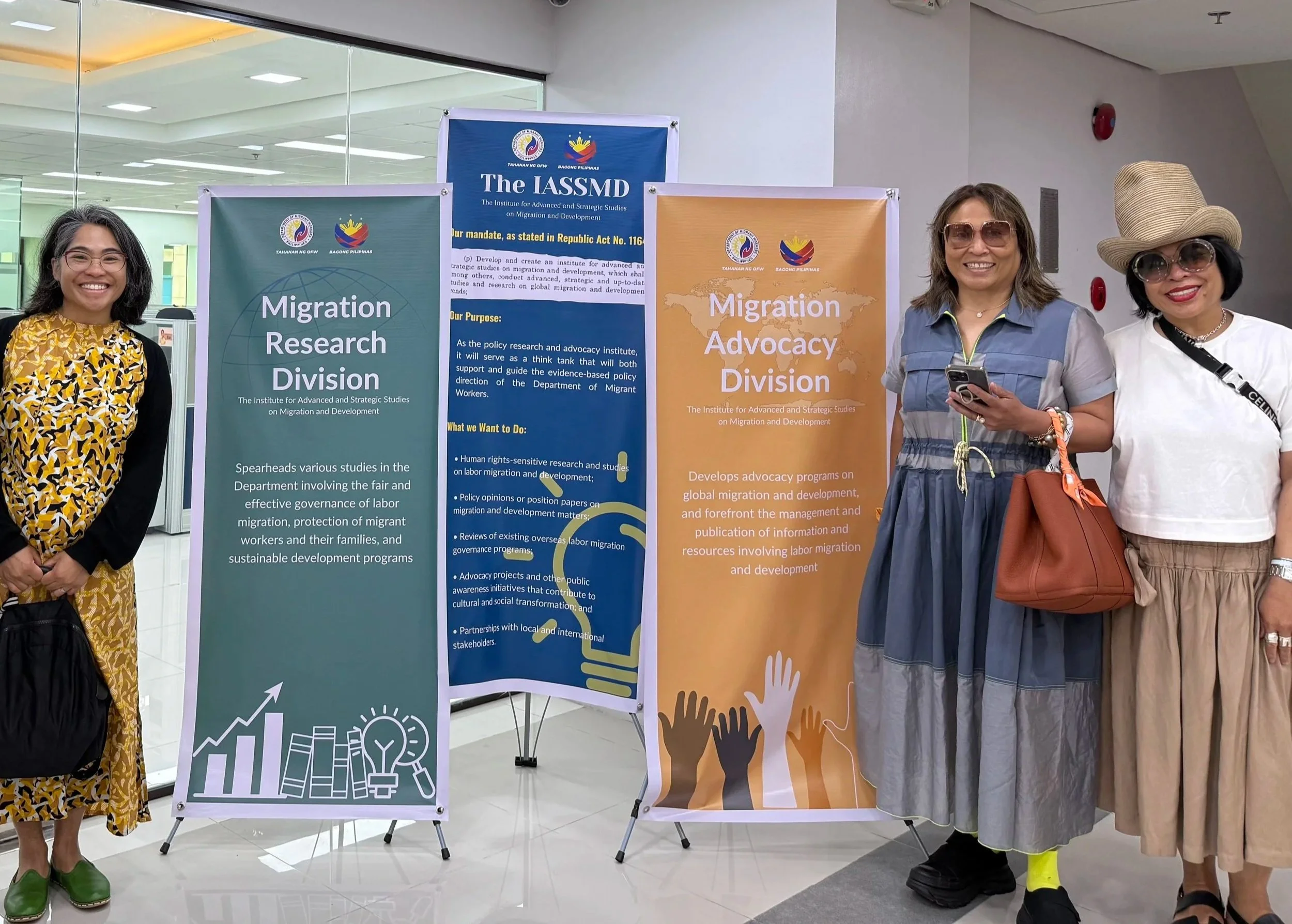
Visiting Rhacel at her research site in Manila.